


Dong Hoi prison, provincial historical relic
10:34 - 15.11.2020
Dong Hoi Prison is located in Dong Hai Ward, Dong Hoi City. The prison is where the French colonialists imprisoned and tortured thousands of communist soldiers not only in Quang Binh but also in all provinces from Nghe An to Thua Thien Hue. At the same time, this is also the place that witnessed many examples of loyalty and indomitability of revolutionary soldiers detained in the prison during the resistance war against the French colonialists.
Hoang Phuc Pagoda, the oldest pagoda in Central Vietnam
At the end of the 19th century, when invading our country, one of the first things that the French colonialists focused on was building a prison system throughout the country. Building a prison system was on one hand to demonstrate their strength, and on the other hand to intimidate the people, especially those participating in the revolution.
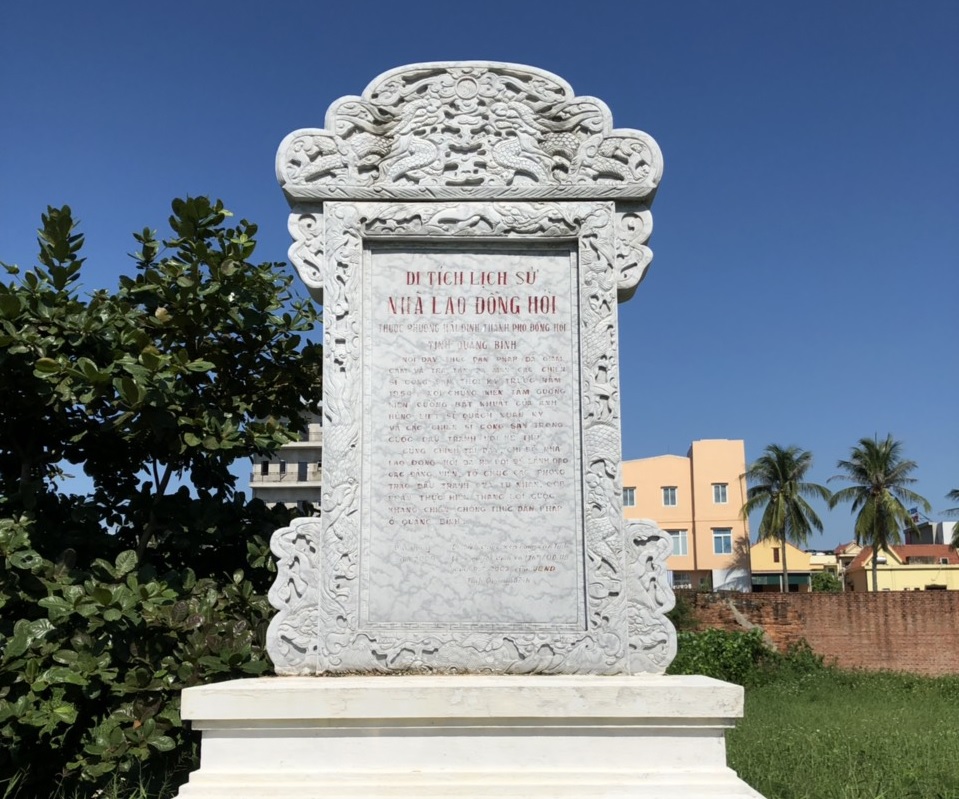
Dong Hoi prison where revolutionary soldiers were brutally tortured
After building Dong Hoi prison, the French colonialists arrested and imprisoned many political prisoners, political suspects and common criminals. Political prisoners were communist soldiers who had been arrested and sentenced, but had not yet been given a clear verdict, and common criminals were prisoners arrested for other crimes. After being arrested and imprisoned, prisoners were subjected to all forms of torture, especially political prisoners.
The French colonialists used forms of torture such as shackling, stringing steel wires, using beef tendon whips, batons… so brutally that many prisoners could not bear it and fainted. They revived the prisoners by pouring cold water on their faces and then continued torturing them until their entire bodies were bruised, torn, and bleeding. In addition, they frequently used torture methods such as electrocution, flying in airplanes, going on submarines, and pouring lime powder into their mouths. Electrocution means using an electric generator to enter the body, causing the entire body to convulse until they fainted.
When taking a plane, they use a rope to hang the prisoner from the ground and then spin him around or beat him with a stick. When taking a submarine, the prisoner is tied tightly to a long chair, then a cloth is used to cover his nose and mouth and tie it to the chair. Then they use a plastic tube to suck soapy water from a bucket placed high up and let it flow down his face, the water flows like a fountain over his nose and mouth through the cloth. If you suffocate, you have to inhale, but it’s all soap, so the tortured person feels like his head is about to pop out, his chest aches, and his whole body writhes in pain.
Many times, they also tortured prisoners by pouring lime powder into their mouths, creating a salty, bitter and burning sensation in the mouth. If they still did not confess, they would electrocute them, beat them, strip them of their clothes, tie their hands and feet, gag their mouths, and throw them into the cell. If they moved, the gongs would be tightened…
In addition to beating and brutally torturing prisoners, the French colonialists also applied a harsh living regime to prisoners. The prison guards colluded with the contractors to reduce the prisoners’ food and rations. They fed the prisoners only a small handful of rice per meal, with one or two rotten or poor quality fish stuffed in the middle. Sometimes they fed them brown rice (milled rice, not pounded rice) that was as separate as brown dregs and mackerel fish sauce that looked like black mud and smelled rancid and was as bitter as quinine. They were only allowed to eat vegetables and meat occasionally throughout the year. As punishment, they did not even let the prisoners eat rice but rice, and sometimes they even left them hungry, thirsty, dirty, and in pain without medicine. If they resisted, they used whips to beat and torture them. In each cell, there was a toilet for defecation and urination, which always made the room smell very foul.
Dong Hoi prison witnessed the steadfast struggle of revolutionary soldiers.
With such extremely savage torture and harsh living conditions, the French colonialists wanted to subdue and shake the will of the revolutionary soldiers, but not accepting the injustices of the French colonialists, they constantly fought against this ruling regime. In prisons, there were always struggles against the prison guards, demanding fair treatment and improved living conditions. In addition, the political brothers and sisters also used the form of persuasion and influence to influence the guards, gradually attracting ordinary prisoners to participate in their struggles.
The French colonialists tried to suppress and terrorize in order to extinguish the revolutionary fire in the prison, but on the contrary, the fire grew brighter behind the prison bars. This was thanks to the wise leadership of the Party members in the Dong Hoi Prison Party Cell, the Communist fighters who were not afraid to sacrifice themselves, always fighting against oppression and exploitation for a noble ideal. This was demonstrated through the struggle movements of prisoners under the leadership of the Dong Hoi Prison Party Cell.
In late 1930 and early 1931, the Nghe Tinh Soviet movement broke out, causing confusion and fear among the French colonialists. After brutally suppressing and terrorizing the movement, the French colonialists transferred 30 prisoners from Vinh prison, Ha Tinh to Dong Hoi prison. Among them was comrade Le Ba Canh, Secretary of the Ha Tinh prison Party Cell. When transferred here, he continued to fight against the French with the Dong Hoi prison Party Cell. The prison Party Cell organized and led the prisoners’ struggles against deportation, against heavy labor, demanding blankets, demanding the right to read published books and newspapers…
Most notably, the Party Cell organized and led the prisoners on a hunger strike to improve the living conditions of the prisoners in the prison. The colonialists not only did not respond to the demands but also rushed in to beat the prisoners and called the police to shackle each of them in their cells. To show their fierce resistance, all the prisoners unanimously went on a hunger strike and cheered, causing chaos in the prison. Although the French colonialists tried to cover up all information, the news of the prisoners’ struggle still spread widely and received the sympathy, support and assistance of the people of the Town.
The secret base in the town heard that the prisoners were on hunger strike to fight, so Ms. Ton Nu Thi Chau, a member of the group of patriotic young intellectuals, and Mr. Le Quynh, the owner of a traditional medicine shop, tried to help and support the struggle. On the one hand, they spread propaganda to expose the crimes of the French colonialists against the prisoners; on the other hand, they mobilized the people to contribute soap, clothes, medicine, cakes, sugar, milk, paper, ink, and even needles and threads to support the brothers and sisters who were fighting in prison. Thanks to that, the brothers and sisters overcame illness and hardship to continue the struggle and finally the French colonialists had to give in and accept the demands of the brothers and sisters. The victory of the struggle stirred public opinion among the people of the town and once again strengthened patriotism and hatred of the enemy among the masses.
After the climax of 1930-1931, the struggles in the period of 1936-1939 made the revolutionary movement in Quang Binh flourish, the cadres and party members became more mature, the revolutionary masses were trained and tested in practical struggles. Contributing significantly to these successes were the efforts of the prisoners in Dong Hoi prison who were freed during this period. All of them brought into play their political qualities, leadership ability, and fighting spirit from the days of imprisonment and torture in this struggle for people’s livelihood and democracy.
xAfter the climax of 1930-1931, the struggles in the period of 1936-1939 made the revolutionary movement in Quang Binh flourish, the cadres and party members became more mature, the revolutionary masses were trained and tested in practical struggles. Contributing significantly to these successes were the efforts of the prisoners in Dong Hoi prison who were freed during this period. All of them brought into play their political qualities, leadership ability, and fighting spirit from the days of imprisonment and torture in this struggle for people’s livelihood and democracy.
Locked in a cell, he still tried to contact comrades in prison, through screening and testing, he gathered loyal comrades, consolidated the Party cell and sent reports outside to ask for the Party Committee’s opinion. In the dark prison, he still secretly sent out words of encouragement, educating the revolutionary will and fighting spirit to party members. Before his death, he still proudly sang the Internationale. Despite his sacrifice, his example of revolutionary activities still shines brightly in the hearts of the cadres and people of Quang Binh.
In December 1949, the Dong Hoi City Party Committee decided to let the Ba Ren Party Cell organize a prison break for 6 comrades. After this prison break, the enemy increased terror and strict security. Comrade Luu Thi Thuan replaced Comrade Ngo as Party Cell Secretary, and Comrade Luu Thi Xuyen as Deputy Party Cell Secretary. The Party Cell Committee organized more secretive Party cells, using district units to group the remaining Party members into branches, each branch was in charge of a Party Cell Committee member for easy communication.
The Ba Ren Party Cell led 350 prisoners to fight the enemy every day. After the Geneva Agreement was signed, the enemy still stubbornly refused to release these prisoners. On August 10, 1954, the enemy transferred all the prisoners from Dong Hoi to Quang Tri. Here, the Ba Ren Party Cell continued to coordinate with the Quang Tri prison to fight for the French colonialists to return freedom as stipulated in the Geneva Agreement. After the complete liberation of the North, the French colonialists transported the prisoners to Da Nang, boarded them on ships and returned them to us at the Hoi – Hoi An port.
After peace was restored and the North was completely liberated, our people embarked on the task of building socialism in the North and together with the people of the whole country continued the resistance war against the US to save the country. Quang Binh became the outpost and a solid rear base of the Southern frontline. During the fierce years of the war, implementing the slogan “All for the frontline, all to defeat the American invaders”, “No regrets for the house if the vehicle has not passed through”: Dong Hoi prison was dismantled to get materials to fill the roads and bomb craters, ensuring smooth traffic, contributing to the liberation of the South and national reunification.
Dong Hoi Prison is now a provincial historical relic, marking the early years of the Communist soldiers’ steadfastness, determination, and determination not to submit to the enemy in the prison, contributing to adding more color to the golden history of the homeland and the country. The revolutionary fighting tradition of the Communist soldiers in Dong Hoi Prison will forever be a shining example for the next generations to follow, striving on the new path, building a strong, beautiful, and prosperous country.
Currently, the Dong Hoi Prison relic is just an empty land with overgrown weeds located next to the Quang Binh Border Guard Command, with no other artifacts left except for a lonely relic stele. Hopefully, in the near future, the Dong Hoi Prison historical relic will be restored and renovated to match its historical value to become a meaningful destination for visitors when traveling to Quang Binh.
Quang Binh Monuments and Scenic Spots
Share this post:


