


Monuments on Road 20 Quyet Thang
10:38 - 09.11.2020
The relic sites on Road 20 Quyet Thang are located in Phong Nha – Ke Bang National Park in Tan Trach and Son Trach communes, Bo Trach district, Quang Binh province.
During the resistance war against the US to save the country, the Ho Chi Minh Trail system in Quang Binh held an important position in the entire Ho Chi Minh Trail system of the whole country, because Quang Binh was the “gateway”, a key area and a strategic junction of transportation to effectively support the battlefield in the South. From Huong Khe area (Ha Tinh) to the entire territory of Quang Binh province and Vinh Linh special zone (Quang Tri) were linked into a solid strategic logistics base, a continuous starting center of the Ho Chi Minh Trail system.
See more: Phong Nha Ke Bang Travel Experience
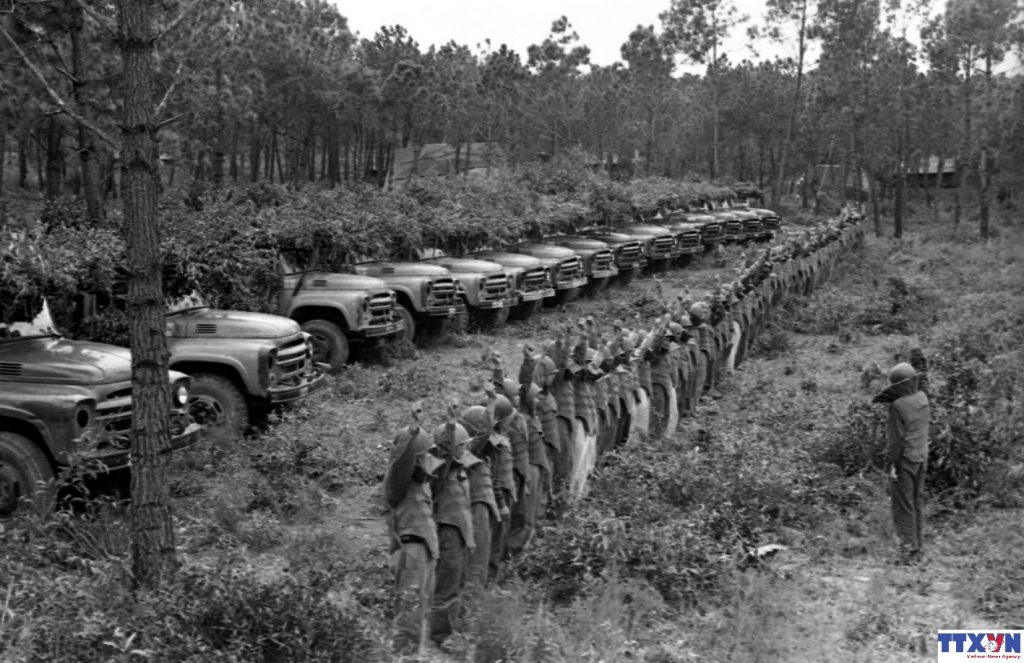
Road 20 Quyet Thang is an important hub in the Ho Chi Minh road system.
Road 20 Quyet Thang – the road is considered the key point in the historical Ho Chi Minh Trail system, the strategic road across Vietnam that has gone down in the history of the nation. The name “Road 20” was given by the Ministry of Transport and the Command of Group 559 as “the road of the 20s”, because the forces participating in building this road included soldiers, Youth Volunteers, frontline laborers, and the forces participating in “Three Ready” were mostly in their 20s. Road 20 is also the road that represents the determination to “break the single line”, the determination to fight for a decisive victory on the transportation front, so the road is also called Road 20 Quyet Thang.
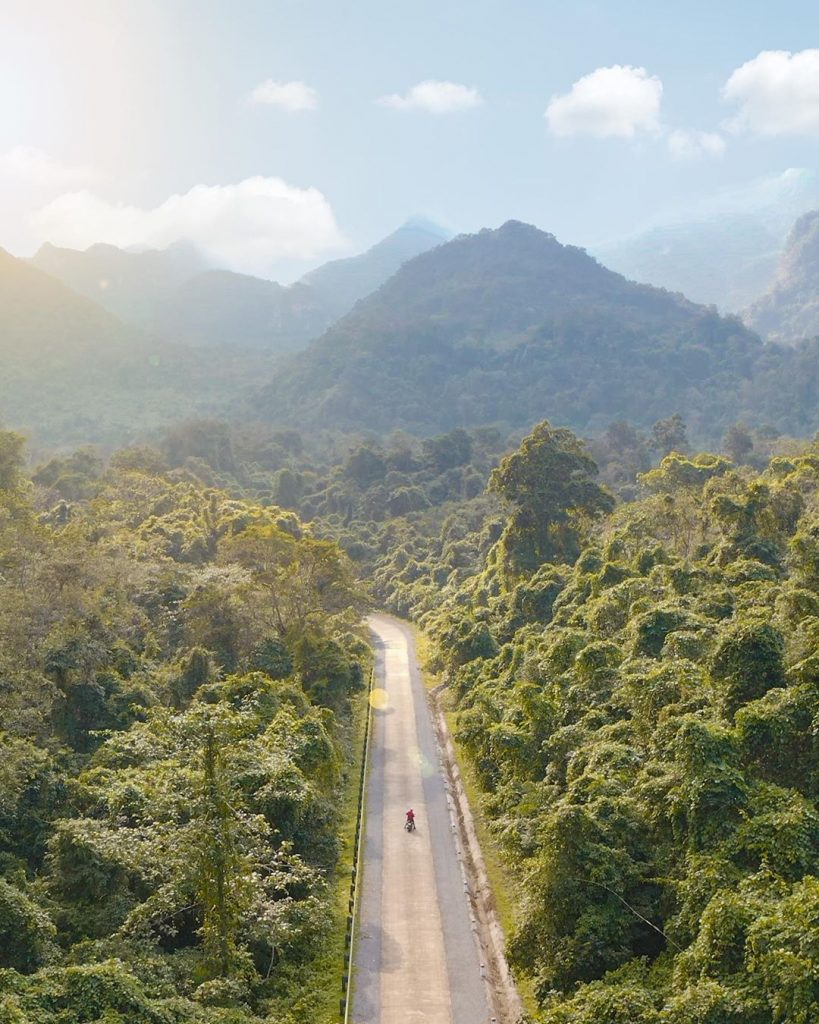
Road 20 Quyet Thang started from km 0 Phong Nha, crossed Truong Son peak and connected with roads 128 and 129. Road 20 was opened to destroy the single transportation route from North to South, disperse the enemy’s attacks and bombings, and avoid the Xieng Phan water pocket – a place that was often flooded during the rainy season. Since its opening, Road 20 has contributed greatly to destroying the single effective support route for the battlefield. Therefore, Road 20 was discovered and attacked fiercely and madly by the enemy. All the most modern weapons were used by the enemy to destroy, all kinds of bombs and bullets were dropped on Road 20, including using B52 carpet bombing. There were times when the enemy fought for 4-5 days and nights, creating fire coordinates. The level of destruction was extremely fierce and with increasing intensity. “In the dry season of 1965-1966, the enemy attacked Route 12 87 times and Route 20 102 times. In the dry season of 1970-1971, the enemy attacked Route 12 617 times and Route 20 926 times.”
However, the enemy’s rain of bombs and bullets still could not stop the determination of the patriots. With the motto “Fight the enemy and go, open the way and advance” and the determination “The enemy attacks, we keep going”, the army and convoy still overcame bullets and bombs, rushed forward, and promptly supported the battlefields. During 11 years of surveying, opening the way, fighting to ensure traffic, and completing the mission of supporting the battlefield on Road 20 Quyet Thang, 4,000 to 5,000 martyrs heroically sacrificed and thousands of wounded soldiers out of a total of more than 8,000 cadres, workers, youth volunteers, and soldiers working on this route. That was not only a testament to the fierce nature of the transportation front, but also deeply engraved the symbol of the shining examples of revolutionary heroism of the Vietnamese people in the resistance war against the US to save the country.
Many famous places on Road 20 Quyet Thang have gone down in national history as legends:
Ba Thang Slope
Ba Thang Slope is located at km 16, marking an important historical milestone in the campaign “Breaking through Truong Son, opening a straight and profitable road”. The most difficult point in opening road 20 – Quyet Thang was that to have a road through Doc Ba Thang, we had to level more than 10,000m of rocky mountain, a dangerous and steep rocky slope of about 400m high. To conquer this rocky mountain, the engineers had to put three bamboo ladders together to climb up and punch holes to attach explosives, so it was called Doc Ba Thang.
The terrain and topography of the road passing through Ba Thang slope is very dangerous, winding with steep rocky mountains on one side and a deep stream on the other: “the road turns and curves three times”, Ba Thang slope of Road 20, “the death gate of the Truong Son Mountains”, is always the focus of fierce attacks by the enemy, a place that often “eats” coordinate bombs. There was a period when the enemy concentrated on continuous attacks for more than three months (from July 15, 1968 to October 30, 1968) on the road from Km 12 to Ba Thang slope – Km 16, causing the road surface to be plowed up, broken, and unable to be transported. This was one of the places where we and the enemy fought fiercely. Ba Thang slope is also associated with the heroic event of 8 Youth Volunteers (Eight-ladies cave) who sacrificed their lives in a cave at Km 16.5, a legendary epic, shining with revolutionary heroism of cadres, soldiers, Youth Volunteers, and transportation forces on duty on Road 20 Quyet Thang.
NH General Depot
The NH General Depot at Km12, Road 20, Quyet Thang was the “strategic logistics base” of the campaigns. Station 14 used a large cave, located about 2km north of Road 20, to store weapons and equipment, and the area outside the cave gathered explosives, food, and provisions. The NH General Depot always received a large amount of goods transferred from the rear, sometimes up to 4 – 5 thousand tons. Located in an important strategic position on the Highway 20 crossing, the NH General Depot was always in the sights of the US Air Force, most fiercely in the years 1967 – 1968, the US imperialists focused on fierce attacks continuously for many days and nights with the tactic of completely destroying Km12.
In less than 4 months (from July 6, 1968 to October 30, 1968), American aircraft dropped 16,253 bombs on Km12. However, the officers and soldiers on duty at the NH depot remained steadfast, sticking to their duties, ensuring that weapons, food, and provisions were safely delivered across the border to timely support the battlefields in the South and Laos.
The place of sacrifice of 16 Youth Volunteers at Long Dai Ferry Terminal 2
Information Cave
Information Cave is a high, wide and deep cave about 180m located on the mountainside about 50m above ground, at km4 of Road 20, 2km south of the road. During the years 1967 – 1972, Information Station A70 of Company 5, Platoon 134 used it as a place to set up a communication station and to operate the Station. During the period of fighting against the destructive war of the US imperialists, Information Station A70 and the bare wire line of the unit in charge along the liaison road and Road 20 Quyet Thang were always fiercely attacked by US aircraft, but with the spirit of “The heart is still beating, the information blood vessels are open”, the officers and soldiers of the A70 base station were brave, resilient, not afraid of sacrifice, hardship, sticking to the information battlefield, always completing the mission, keeping the information blood vessels open.
Nurse Cave
Nurse Cave is located at Km18, Road 20, Quyet Thang. This is the resting place of martyr nurse Nguyen Thi Sang and Truong Som soldiers who sacrificed their lives on the route Km 14 – Km 18 – Road 20. Nurse Nguyen Thi Sang was from Phu Tho, Thanh Hoa province, belonging to unit C211 – construction site 20. While on duty transporting the wounded, nurse Nguyen Thi Sang had a severe malaria attack, but because of her duty, she tried until her last breath, and then she quietly lay in the middle of the Truong Son mountains and forests. Her sacrifice made her comrades extremely sorry and admired.
Nurse Cave and other historical sites Road 20 Quyet Thang is a place that records typical historical figures and events that demonstrate a heroic historical period of the Vietnamese people in the resistance war against the US, saving the country and is a priceless lesson for the determination to “Split Truong Son to save the country”, for the brave sacrifice “Living to stick to the road, dying steadfastly and bravely” for the miraculous creativity in the “campaign to break through Truong Son, opening the way to victory”, in “Fight the enemy and go, open the way and advance”. Those priceless lessons will forever remain intact with practical values for the young generations today and tomorrow.
Now, at the relic sites on Truong Son Street in general and Road20 Quyet Thang in particular, every day, especially on the anniversaries of April 30, July 27, November 14, veterans, relatives of martyrs and tourists from all over the country visit, burn incense to remember their comrades, relatives, and show gratitude to those who sacrificed their youth for the Fatherland.
Share this post:


