


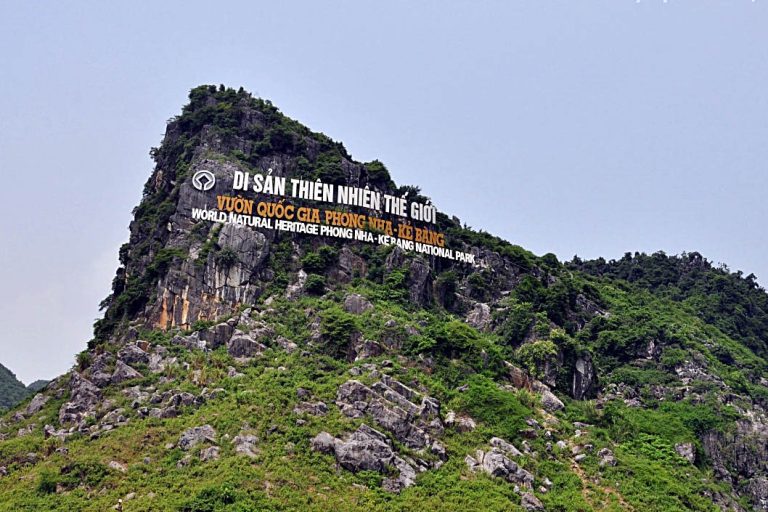
Phong Nha Cave – Attractive tourist destination
Phong Nha Cave is a cave in the limestone mountains of Phong Nha – Ke Bang National Park. It is an attractive…


22:26 - 02.05.2025
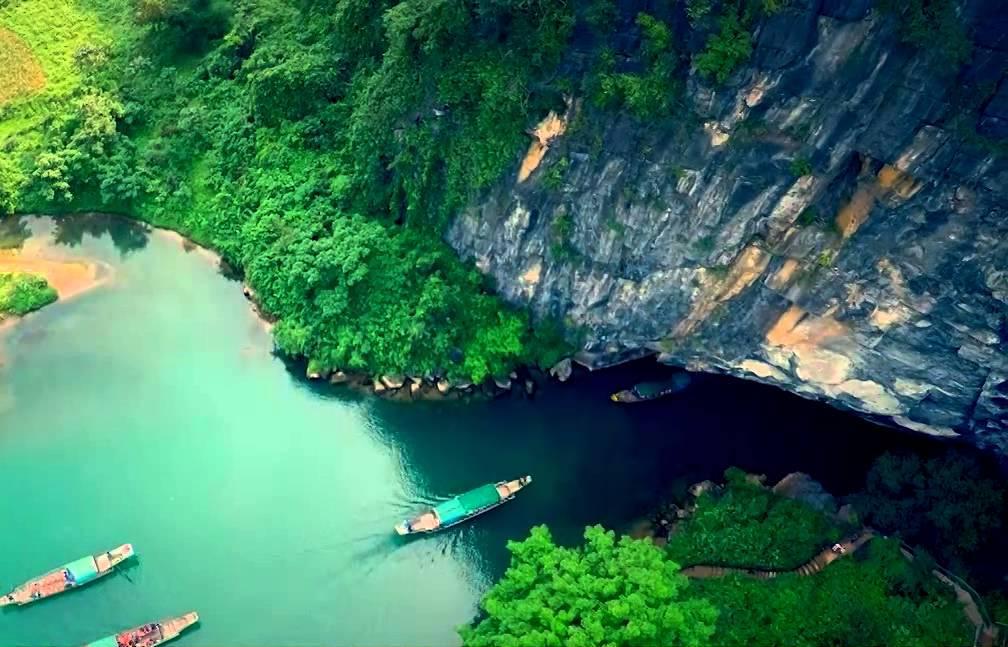
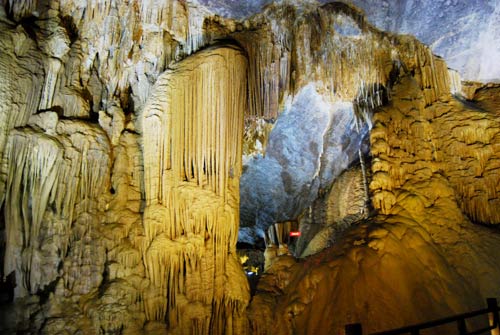
Phong Nha Cave is a world natural heritage, Phong Nha has the longest water cave, the highest and widest cave entrance, the most beautiful sand and rock beach, the most beautiful underground lake, the most magnificent and magical stalactites, the longest underground river in Vietnam, the widest and most beautiful dry cave. But where does the name Phong Nha come from? And what does Phong Nha mean?
Some tour guides tried to explain what Phong Nha was.
One person said that one day a group of British tourists asked the above question. He thought Nha was a mispronunciation of Gia, so he explained: “Phong Nha is the house of wind”.
Another person, who specializes in tours to learn about customs and culture, disagrees and has a more concise explanation: “Phong Nha is the tooth of wind”. Then, the guide fluently cited data from a guidebook on Vietnamese landscapes: “From above, stalactites spread down like big teeth and the wind constantly blows through the gaps between the teeth. Therefore, Phong Nha is… the tooth of the wind! More broadly, Phong means rich, full. So Phong Nha also means… many teeth, good harvest! Very suitable for an agricultural country with a rice civilization like Vietnam”.
Not giving up, the other guy deduced: “Maybe Phong Nha comes from Phong Nhu camp? If so, then Phong Nha means… Wind Breast!”.
Historical data is as follows:
According to researcher Phan Thuan An, through looking up ancient documents written in Chinese characters, he first saw the word Phong Nha appear in Phu Bien Tap Luc by Le Quy Don (1776).
In the section recording the list of prefectures, districts, cantons, communes, villages, farms, and books of the two regions of Thuan – Quang, Mr. Le Quy Don said: Phong Nha at that time was the name of an administrative unit in the mountainous region, equivalent to the village and commune level in the plains. As for who later used this place name to call the name of the cave area on the spot, there is no document to confirm when.
According to some articles by some French people such as Buoffier (1930), Antoie and Michel (1932), Madeleine Colani (1936): the name Phong Nha cave (or Les Grottes des Phong Nha) originated from that village and was used earliest in the 1920s.
In an article in Da Nang Tourism magazine 07.2003, researcher Phan Thuan An cited new data, worth pondering.
To summarize: In all three documents Dong Khanh Dia du Chi luoc (handwritten version, around 1886 – 1888), Dong Khanh Ngu lam Dia du Chi do (printed in Tokyo 1943, volume 2, Bo Trach district) and Dai Nam Nhat thong chi (published in 1909 – Duy Tan 3, volume 8, Quang Binh province), the form of the place name Phong Nha is written the same. Accordingly, Phong means mountain peak.
The Etymology Dictionary explains very clearly: “Sơn chi trực Thượng nhi nhuệ giả viết phong” (meaning the top of a mountain is straight and pointed, called phong). The meaning of nhu nha is very complex. The most common literal meaning is a type of government office (nha so, nha môn…). The Etymology Dictionary defines nha as an official office.
Khangxi dictionary records another meaning as nha tham.
Tu Hai dictionary explains nha tham: “The officials who gather at the office of a large government to discuss political affairs are called nha tham.”
According to Mr. Phan Thuan An, it is also necessary to pay attention to the fourth meaning of the word “nha” in the Kangxi dictionary: “Anything arranged in a row that looks somewhat like officials lining up in a government office is called “nha”.
An interesting thing is that in the second meaning of the word nha in the Tu Nguyen dictionary, there is a quote from a poem by Tran Tao (a doctor of the Song Dynasty who lived over 800 years ago), which contains two words phong nha: “Cao son nhu tho chung phong nha” (meaning the high mountain peaks are arranged in rows like officials standing in line to receive orders from their superiors).
Because some ancient place names in our country were taken from existing place names in China, the researcher took the trouble to compare them. “Luckily!”, Mr. Phan Thuan An exclaimed: “There is no place name Phong Nha there, so Phong Nha in Quang Binh province is a unique place name.”
He concluded the article: “In short, Phong Nha is not the tooth of the wind or many teeth or wind house (and certainly not the breast of the wind!). This place name was given by the suggestion from the image of mountains lying in regular rows like the image of mandarins standing in rows in hierarchical order in the court.”
Thinking in that way, we can think that Phong Nha – Ke Bang cave complex has been waiting in the court for the United Nations for a long time and now it is UNESCO’s turn to name and praise it as a World Natural Heritage!
Netin Travel
Share this post:


