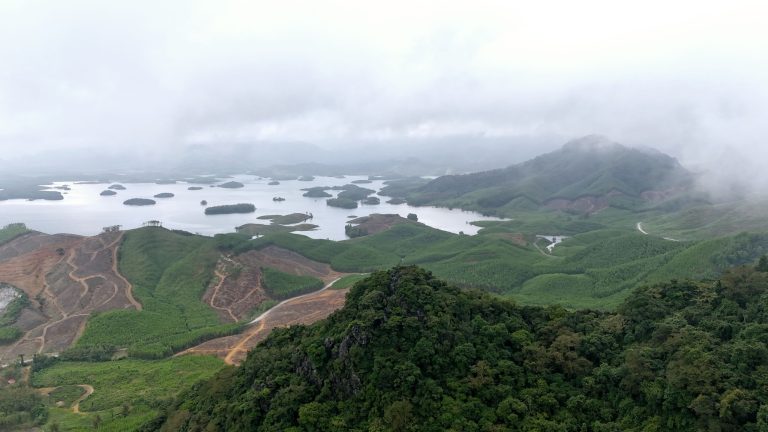


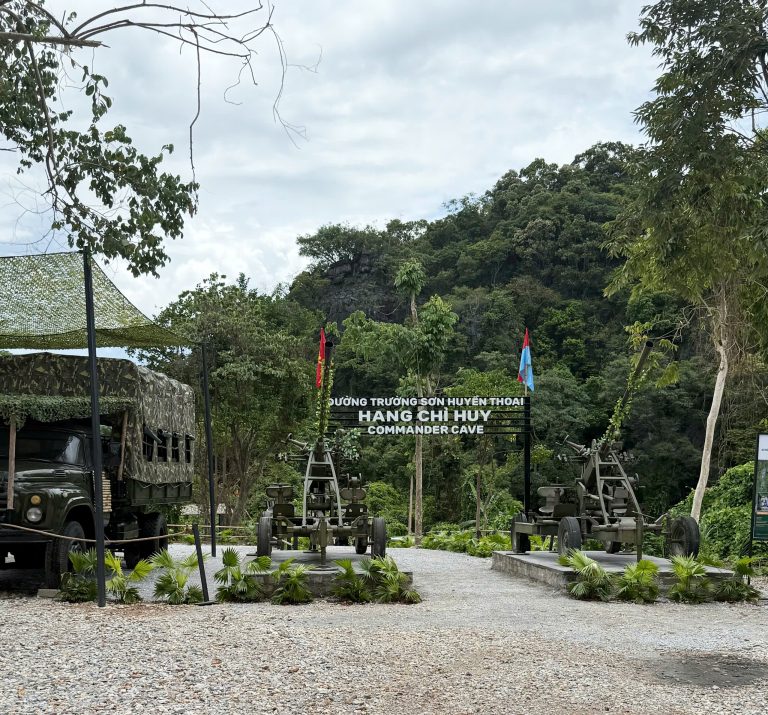
Eco-tourism area “Legendary Truong Son Road -Commander Cave”
On the morning of July 5, the Management Board of Phong Nha – Ke Bang National Park, Quang Tri province, in coordination…


11:44 - 18.03.2026
Quang Binh Quan is located in the center of Dong Hoi city, Quang Binh province. Quang Binh Quan is considered a symbol of Quang Binh. With its unique architecture, the restored building is now a check-in and historical research destination for tourists when traveling to Quang Binh. Located right on National Highway 1A, it is very convenient for tourists to visit. Quang Binh Quan also has many names. Some say it is the entrance to Quang Binh Palace, others say Binh Quan Gate.

With its unique architectural art, Quang Binh Quan is a symbol of Quang Binh. It is also a unique architectural feature of Vietnam.
https://quangbinhtravel.vn/en/tour/paradise-cave-7000m-interesting-experience
Before the August Revolution of 1945, Quang Binh Quan (on the Duc Ninh side) still had a moat outside the citadel, a brick bridge across the moat, and at the intersection between Duc Ninh and Cau Rao streets (in the past, during the Nguyen Dynasty, it was the royal road and the upper road) there was still a ghost in a large cemetery.

Quang Binh Quan was destroyed by the French army when they withdrew from Dong Hoi in 1954, then our State rebuilt it almost exactly as before. In 1965, the war destroyed it and it was destroyed by American planes. Currently, the people of Dong Hoi town and the State have restored it. (Almost exactly as before).
In fact, on a length of more than 3,000 truong, Luu Dau Mau – Nhat Le has three gates, but old history only records two. Those three gates are:
1. The entrance to Quang Binh Palace is called Quang Binh Quan (commonly known as Binh Quan Gate).
2. Ly Chinh Dai Quan Mon Gate, King Minh Mang changed it to Vo Thang Quan, commonly known as Thuong Gate.
3. Thu Ngu Gate at Nhat Le seaport (history does not record it, now also lost)
As for Quang Binh Quan, there is still controversy about its name and age. The questions are: when did it come into existence? From the time Dao Duy Tu built the rampart or from the time King Minh Mang built the brick and stone structure? If it came into existence from the time Dao Duy Tu built the Thay rampart, what was its name and where was its location, or was it also the place where King Minh Mang built the brick and stone structure as it is today? Quang Binh Quan today has been restored from the original sketches.
Until now, we have not seen any documents stating whether Quang Binh Quan had any other name before the reign of Minh Mang 6 (1826), such as Vo Thang Quan, the Nguyen Dynasty history clearly recorded that it was originally called Ly Chinh Dai Quan Mon, when Minh Mang ordered the construction of new bricks, it was changed to Vo Thang Quan.
In reality, Ly Chinh is a combination of two village names Chinh Thi, which is Trung Nghia village today, and Minh Ly, which is Thuan Ly village later (now Nam Ly and Bac Ly wards).
Regarding the location, no matter what other name Quang Binh Quan had before, it was certainly originally located in the defensive line of Luy Dau Mau – Nhat Le, which was established together with Ly Chinh Dai Quan Mon (Vo Thang Quan) and is also located in its current location, the location where both roads: Thien Ly and Thuong Dao of the Ly – Tran – Ho – Le – Nguyen dynasties had to pass through and meet to continue to Dang Trong.
To determine whether Quang Binh Quan was built before or after the brick construction in the Minh Mang dynasty, first of all, we must determine whether the traffic routes of the Trinh – Nguyen period when pouring into Dong Hai to Quang Binh palace had to pass through here to continue to Phu Xuan will be clear.

The book Phu Bien Tap Luc by Le Quy Don records:
“…From Nghe An, go to the South, cross Hoanh Son mountain, through Thuan Than commune, Phu Luu district Bo Chinh, go east, to Lu Dang village then to Gianh river (…) through Cao Lao commune, cross Le De mountain for several dozen miles (…) go southeast through An Phuc, Thien Loc to An Lao village, Luong Xa commune, commonly called Cho Don, that is the middle road (…) The Upper road goes from Cao Lao to (…) The Lower road goes from Ly Hoa to (…) all meet here (continue) go through the communes to Phuc Tu pagoda and enter (…) If you cross Dong Hai river to enter Khang Loc district, Le Thuy, then a main road goes forever to the left, the plain is spacious (…) If you do not cross Dong Hai river but go to the right (that is, follow the Upper road) for a few miles, to Ong Hoi mountain, pass Truong Duc to go to Dinh Tram…”
The Dong Hai River that Le Quy Don mentioned here is none other than the Cau Dai River, the confluence of the Le Ky and Nhat Le rivers, where the “connecting hyphen” of the two ramparts Dau Mau – Nhat Le connects.
At that time, from the North to the South to get here, one had to cross the Dong Hai River, or Cau Dai River. When there was no bridge, people called it Quang Binh ferry, or Dong Hai ferry. Quang Binh Quan was just a few hundred meters north of Cau Dai. To get to that bridge, the road had to go through Quang Binh Quan, the meeting place of the two roads Thuong and Thien Ly that Le Quy Don had mentioned.
Compared with the remaining traces of the roads that met from Cho Don to Dong Hai, that is Thien Ly road, or the main road, compared with today’s National Highway 1A, there are differences:
– One is: the north-south Thien Ly road during the Trinh – Nguyen period, when going from Cho Don (today’s Hoan Lao) to Loc Dai village (today’s Loc Ninh), passing Ong Cop temple (now the Cuba Hospital – Dong Hoi), crossing Xom Lang field, Minh Ly village (today’s Nam Ly ward), passing Cau Rao (today’s Dong Hoi bus station) along the outside of Quang Binh citadel (also known as Dong Hai fort or Dong Hai citadel) then going through Quang Binh Quan gate and straight to Cau Dai. (Almost exactly like the current branch road, but the branch road does not go through Quang Binh Quan).
– Second: National Highway 1A today, when reaching the Cuban Hospital intersection, turns to the east, crosses the Tran Ninh village field (also called Phu Ninh) (Dong Phu ward today) to the Phong Thuy culvert (formerly Ba Vi), then turns to the south, goes straight into Dong Hoi city (formerly Dong Hai station) through the two gates Bac Mon and Nam Mon (now a bridge), passes behind Quang Binh Quan to Cau Dai.
Thus, during the Trinh – Nguyen conflict, the Thien Ly road when reaching Dong Hai was a road outside the city, forced to go through Quang Binh Quan to reach Cau Dai.
Today, National Highway 1A replaces the old Thien Ly road, passing through the inside of the citadel, when exiting the gate (now the bridge) Nam Mon, running inside (the back side) Quang Binh Quan to reach Cau Dai.
During the Nguyen Lords’ reign, if people from Nam Bo Chinh district or the North had any business and wanted to enter Quang Binh citadel, if they traveled by land, they had to first enter Quang Binh Quan gate to present their papers, then go north and enter Nam Mon gate to enter the citadel. But those traveling by water had to stop their boat at Nhat Le gate, present their papers at Thu Ngu gate, then take their boat to the East gate to enter the citadel.
With such historical evidence of the traffic routes during the Trinh – Nguyen period, we can know that the current location of Quang Binh Quan is its old location, when it had the task of controlling the road to Quang Binh Palace. King Minh Mang built bricks and stones just to restore and elevate this relic to the aesthetic level of his time. When Minh Mang became king, there was no more war so he had to build new ramparts and new fortifications.
Because we do not use the old Thien Ly road of the Trinh Nguyen conflict period, but National Highway 1A has become the main road, running inside Quang Binh Quan, so some people mistakenly think that Quang Binh Quan has nothing to do with the North-South exchange and behind Quang Binh Quan lies right on the side of National Highway 1A, blocking Me Suot Street with a small park, which also makes some people think that is the front of Quang Binh Quan, thinking that Quang Binh Quan is built facing the bank of Nhat Le River.
The truth is not like that. As the book Dai Nam Nhat Thong Chi said, Quang Binh Quan had an outer wall to protect it. Obviously, Quang Binh Quan was not only a control gate but also a fighting fortification, so it had an outer wall to protect it! That outer wall was located in front of it facing west, in the direction where the road to Duc Ninh is now.
Normally, a defensive line must always face the enemy, must block and attack the enemy, must stop the enemy! In the case of Luu Dau Mau – Nhat Le in Dong Hai (present-day Dong Hoi), it had to intercept the Trinh army from the North, and the North-South traffic route when reaching Quang Binh citadel went westward, Quang Binh Quan must take that direction as the front, cannot let Thien Ly road go behind. If so, who could it block?
Therefore, today, the Quang Binh Quan historical relic has exactly three Chinese characters written in front of the gate, indicating that the front of this gate is on the side of Me Suot Street and National Highway 1A, because on this side, on the gate of the relic there are no words but there are three steps leading up to the watchtower. However, Quang Binh Quan also has a strategic relationship with two other relics that still exist in Dong Hoi, which are Quang Binh citadel and Nhat Le gate.

Tourists coming to Quang Binh Tourism often check in at Quang Binh Quan. The work has the artistic and historical cultural value of Quang Binh. Located right in the center of Dong Hoi city, tourists can easily visit this symbolic landmark of Quang Binh.
Tourists can combine Quang Binh museum, Dong Hoi citadel or Ho Chi Minh Square and Suot mother monument to take a city tour of Dong Hoi city.
Netin Travel
Share this post: