

Ta Puong Waterfall Quang Tri: Discover the hidden gem in the mountains and forests of Huong Hoa
Quang Tri Province is not only known for its rich natural resources but also for its beautiful and pristine island system such…


10:34 - 11.01.2026
When it comes to Quang Tri tourism, most of us think of the land associated with bombs and bullets, the land rich in the tradition of heroic and steadfast revolution. Today, in addition to the glorious history of struggle, Quang Tri also has many cultural, ecological and resort tourist attractions. Especially after the merger of Quang Binh and Quang Tri provinces, visitors will experience more natural resources as well as the history of the old Quang Binh land. Quang Binh Travel shares Quang Tri tourist attractions, about the land and people here.
Quang Tri is a coastal province in the North Central Coast region, bordering Quang Binh province to the north; the East Sea to the east; Thua Thien – Hue province to the south; and Savanakhet and Salavan provinces of the Lao Democratic Republic to the west.
This is a land with a long history, since the Hung Kings period, the Quang Tri region today is believed to have belonged to the territory of the Viet Thuong tribe. There was a time when Quang Tri belonged to the kingdom of Lam Ap. During the resistance war, this was a land that suffered much pain, and was the place where the border between the North and the South was set at Hien Luong bridge – Ben Hai river for nearly twenty years.
Located in the tropical monsoon climate zone, Quang Tri has high temperatures, abundant light and rain, and humidity. However, if you choose to travel to Quang Tri, you should avoid the months when the province is affected by the southwest monsoon from March to September and the rainy season from September to November every year.
Quang Tri is shaped like the Truong Son mountain range, facing the sea, with all three types of terrain: midland and coastal plains, and coastal terrain, but quite steep. With diverse terrain, Quang Tri has diverse landscapes from majestic natural landscapes to poetic coastal beaches,
Quang Tri has many advantages and potentials for tourism exploitation. Historically, this place used to be the center connecting the two regions of South and North Vietnam. During the Vietnam War, this land was severely devastated by bombs. Being a land with many “red addresses” is an advantage for educational tourism activities and historical exploration. Some attractions such as: Quang Tri Citadel, Truong Son Cemetery, Vinh Moc Tunnels, Khe Sanh, …
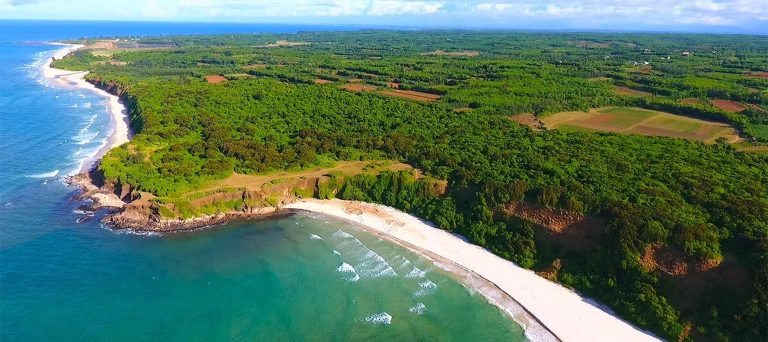
Quang Tri has 4 coastal districts, including Cua Tung, Cua Viet, Tham Khe beach,… especially Con Co island district is getting a lot of attention. In the mountainous area, you can visit Ta Lung mountain, Klu mountain, Dakrong river,… combined with visiting the villages of Van Kieu and Pa Co people.
Quang Tri Citadel, a place that nearly 50 years ago awakened the conscience of humanity around the world because of the fierce confrontation of the liberation army in the 81-day and night war, the historic summer of 1972 against the counterattack to retake the city by the Saigon army.
That historical event wrote an epic about revolutionary heroism, marking a turning point in the history of the struggle for national liberation and becoming a typical cultural heritage of the country. Quang Tri Citadel is not only a message about the fierce cruelty of bombs and bullets, but also the fierce cruelty of each human fate in the war.

This war took place at a very sensitive and decisive time when the cards on the battlefield affected the position of each side at the negotiating table of the Paris conference on ending the war and restoring peace in Vietnam.
Therefore, to maintain the ancient citadel and Quang Tri town, thousands of Liberation Army soldiers across the country and people across the country fought bravely and remained forever on this land. They sacrificed but some of them are no longer intact, their blood and flesh have merged into the ground so that every inch of land, tree branch, blade of grass, every step we take into the ancient citadel today is soaked with the blood of countless martyrs.
The sacrifices and dedication of the children of the revolutionary ideals have built a monument to the desire for independence and left the next generation a noble philosophy of life, the dedication of the last breath for the glory of the fatherland.
With such historical significance and value, the Quang Tri Citadel has received investment from the Party and the State to restore and embellish it into a memorial site to pay tribute to heroic martyrs, and to build a museum to preserve artifacts and photos of this war.
If you choose to travel to Quang Tri, the ancient citadel is a place you must visit, burn an incense stick for the person lying under the green grass. About 1 km away (from the main gate of the citadel) is the Thach Han River.
“Đò lên Thạch Hãn ơi… chèo nhẹ
Đáy sông còn đó bạn tôi nằm
Có tuổi hai mươi thành sóng nước
Vỗ yên bờ, mãi mãi ngàn năm”
(Lời người bên sông – Lê Bá Dương)
Quang Tri ancient citadel and Thach Han river have entered poetry as tragic historical pages soaked in blood and flowers. Coming here on the occasion of the liberation of the South on April 30, National Day on September 2, especially on July 27 – the day of war invalids and martyrs, you will join the people of Quang Tri town in releasing flower lanterns into the Thach Han river. But different from the poetic feeling in Hoi An, flower lanterns in Thach Han are very strange. Come here to feel it!
Bich La ancient village was formed by the migration of people from the North to the South, since the Nguyen Lords. Despite the ups and downs of history, the people of Bich La village still maintain their unique cultural features, imbued with traditional identity.
This is not only the birthplace of many talented and famous people throughout the country. During the war with the US and France, Bich La was also an important revolutionary base in the victory at Quang Tri Citadel, which was fiercely bombarded by the enemy.
Cua Tung Beach is located in Vinh Linh District, Quang Tri with a smooth, white, gently sloping sandbank amidst cool, clear blue water. In the summer, when the Lao winds bring hot, dry air blowing through the sunny and windy land of the Central region, Cua Tung becomes even more attractive to tourists.

In the eyes of foreigners, Cua Tung is the “Queen of the beaches”. Lareine des plages – The French government discovered the poetic beauty of Cua Tung. When King Bao Dai came to Cua Tung, he had his own beach built and was named the “Queen” of the beaches. Quang Tri tourism is focusing on calling for investment, it is expected that in the future, Cua Tung will have a beautiful, luxurious and attractive resort area for tourists.
Vinh Moc tunnels are also located in Vinh Linh district, quite close to Cua Tung. This is a magnificent underground military architectural work, created during the resistance war against the US to save the country. With the slogan “militarizing the whole people, fortifying the whole area”, Vinh Linh army and people dug trenches, with many functions: headquarters, logistics warehouses, schools, hospitals, living areas of each family…, arranged throughout residential areas, along roads, fields, coastlines, connected by a dense system of trenches instead of roads on the ground.

From the end of 1965 to 1968, the whole Vinh Linh district had about 114 tunnels with a total length of more than 40km, a trench system of more than 2,000km and hundreds of other small tunnels, becoming “tunnel villages” – the first time appearing in the history of the Vietnam War, demonstrating the will with the motto: “Not an inch gone, not a millimeter left. Each village and commune is a fortress”, holding on to fight to protect the homeland and keep the blood vessels to the front line open.
Con Co is an island district of Quang Tri, which has a particularly important position as the dividing point of the Gulf of Tonkin – the Southern gateway of the Gulf of Tonkin. Con Co Island is also an outpost protecting national territorial sovereignty at sea, this is also the place associated with fierce battles to protect the sea and islands, demonstrating the heroic fighting tradition of the army and people of the whole country in general and Quang Tri in particular.
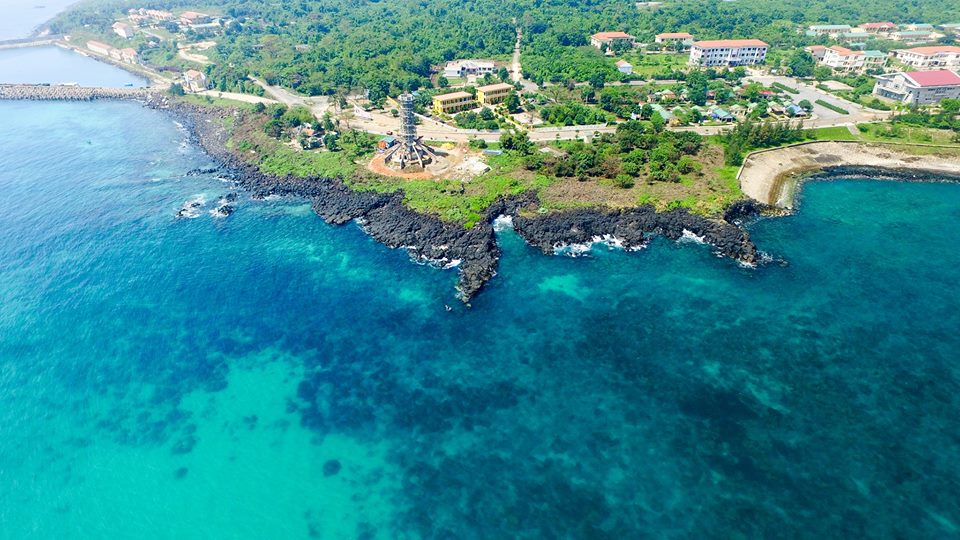
On the island, there are two wharves: Nghe wharf and Tranh wharf, the most beautiful natural tourist spots on the island. At Nghe wharf, the first rays of sunlight are welcomed, the sea breeze is strong, the waves are crashing against the rocks, the square-shaped banyan trees stretch out to the sea as if spreading their arms, firmly protecting the small island from storms. Arriving at Tranh wharf, the beach here is very cool, with full services for renting life jackets, swimming goggles, and equipment for diving to see coral.
Con Co Island was formed from volcanic lava. Therefore, the rock beach has a very distinctive jet-black color. If you have the opportunity to travel to Quang Tri, visit Con Co Island to experience the life of the islanders, contributing to promoting the economy, affirming and protecting Vietnam’s sovereignty over the sea and islands.
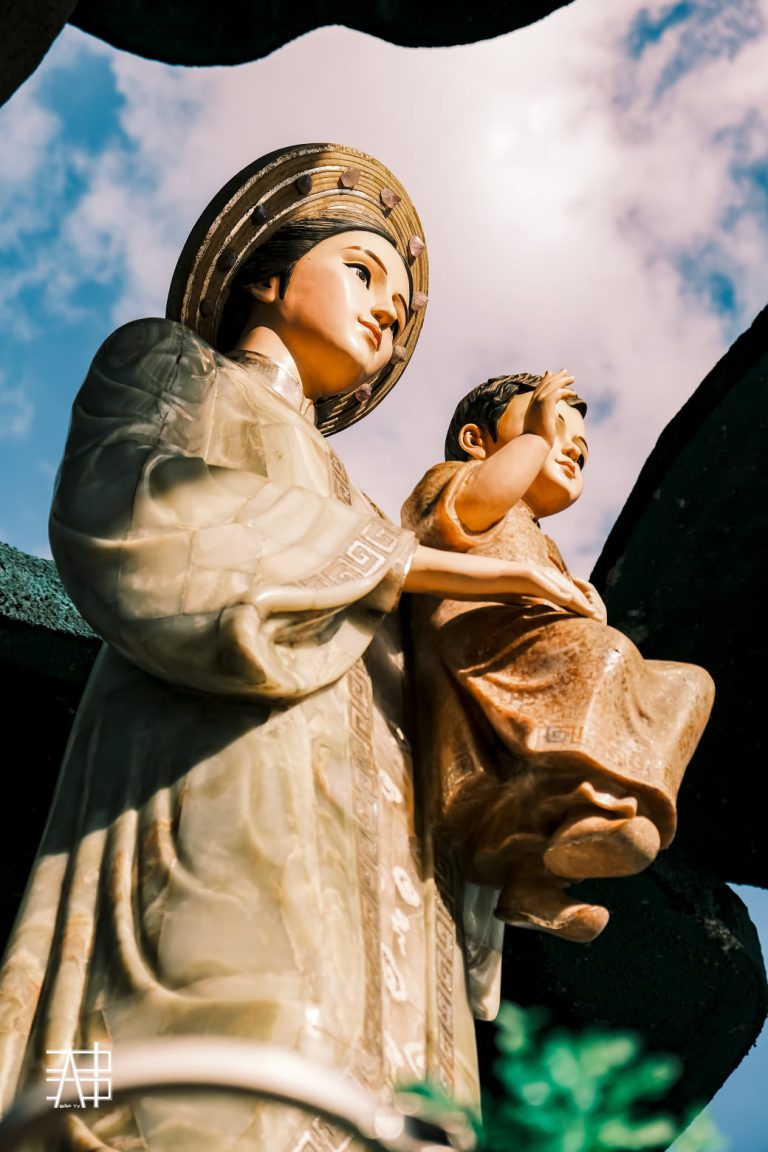
The pilgrimage center of Our Lady of La Vang is located in Hai Lang district, Quang Tri, belonging to the Archdiocese of Hue. This place has gone through many historical and time events.
According to legend and history, this is where the Virgin Mary appeared to guide and comfort the Catholics fleeing the persecution of the Tay Son army during the reign of King Canh Thinh with the edict banning religion.

The architecture of the church here follows the traditional architectural style of Catholic church constructions. In the center of the pilgrimage center, today there remains the bell tower of the Basilica of Our Lady of La Vang. This work was built from 1924 – 1929, and was extensively renovated in 1959.
In the summer of 1972, the Basilica was destroyed by war. Currently, the La Vang Pilgrimage Center has been renovated and added many structures. If you choose to travel to Quang Tri, visit the La Vang Pilgrimage Center to learn about the cultural and religious exchange between Asia and Europe here.
In the history of our people’s defense of the country, there are rivers, mountain peaks, villages, slopes, bridges, … that have become legends, transformed into important historical evidence, vividly attached to the consciousness of the Vietnamese people, including the historic bridge – Hien Luong bridge. And the river is a beautiful image of the homeland, of peace. However, there is a river that has to carry within itself resentment, struggling to endure the division of the homeland and the country, a river that is split into two banks of the border, that is Ben Hai river.

Hien Luong Bridge is a bridge connecting National Highway AH1 (Trans-Asia Highway), spanning the Ben Hai River in Hien Luong village, Vinh Thanh commune, Vinh Linh district, Quang Tri province. This place had to endure the division of North and South Vietnam for more than 20 years during the resistance war against America to save the country.
The war is in memory, but the wounds are always imprinted with unforgettable scars. Truong Son Cemetery is a testament to the crimes of the enemy and also the tragedy of the Vietnamese people who sacrificed their lives and youth, putting the fate of the country above all to regain independence and freedom for the nation.
Truong Son Martyrs’ Cemetery is the place where 10,263 martyrs’ graves of the Liberation Army of South Vietnam and the Vietnam People’s Army are gathered, on the Truong Son route – also known as the Ho Chi Minh trail.
The cemetery is built in the Ben Tat area, next to National Highway 15, in Vinh Truong commune, Gio Linh district, Quang Tri province, about 38 km northwest of Dong Ha city, the provincial capital of Quang Tri province, and about 20 km northwest of National Highway 1A (the Gio Linh district town section).

The total area of Truong Son National Martyrs Cemetery is 39.8 hectares; with 5 areas located on vast hills, next to the upper Ben Hai River. This is the place where 10,263 remains of martyrs who fought and sacrificed on the legendary Truong Son route are gathered. Construction of the cemetery began in October 1975 and was completed 2 years later.
Truong Son Martyrs Cemetery – The resting place of national heroes!
Since the end of 1974, the first martyrs’ graves have been gathered here. During the resistance war against the US, more than 20,000 of the country’s elite sons fell on the Truong Son route and more than half of them have not yet been found. There are many interesting and attractive tourist destinations in the Central region, but when you go, don’t forget to light incense sticks for those who died for the homeland! This is a Quang Tri tourist attraction that you should not miss.
Khe Sanh is the name of a town in Huong Hoa district – Quang Tri. This is a place associated with the heroic history of the nation. In the years 1965 to 1966, the US army and its puppet government chose Khe Sanh as the largest stronghold in the Route 9 defense line.

Khe Sanh, along with Lang Vay and Ta Con, were considered by the US military and the puppet government of Saigon as the “three divine eyes”. With the hope of being able to cut off the Ho Chi Minh trail and prevent the North from sending manpower and material support to the South.
In early 1968, our army and people launched the Route 9 – Khe Sanh campaign. After 170 days and nights of attack, on July 9, 1968, Khe Sanh was completely liberated. Huong Hoa became the first district in the South to be liberated.
Traveling to Quang Tri and coming to Khe Sanh, you can also visit some other attractions such as Khe Xanh stupa, Sa Mu pass, Chenh Venh waterfall, Ta Phong waterfall, O O waterfall, Lao Bao prison, …
Lao Bao international border gate is located in Lao Bao town, Huong Hoa district, Quang Tri province, on the other side of the border is Den Savanh border gate of Laos. This is an important node on the East-West Economic Corridor connecting 4 countries Myanmar, Thailand, Laos and Vietnam.

The special thing about this border gate area is that it is located opposite the Savanh border trade area of Laos, so at Lao Bao tourist area, you will have the opportunity to shop for many things at attractive prices. In the Quang Tri tour through Lao Bao border gate, after completing the procedures, you can eat in 3 countries in 1 day: Vietnam, Laos, Thailand.
Experience Quang Tri Night Tour
If you are a lover of exploring majestic mountains, admiring vast forests, and immersing yourself in cool, fresh streams, Dakrong Nature Reserve is the place for you when traveling to Quang Tri.
This is one of two protected areas that still retain the largest area of lowland evergreen forest in Central Vietnam (the other is Phong Dien Nature Reserve in Thua Thien – Hue province). This place is also home to rare and endangered animals such as the Douc Langur, Pig-tailed Macaque, Red-faced Macaque, and Red-cheeked Crested Gibbon. Notably, two new species of animals, Saola and Large-antlered Muntjac, have been discovered in the area.
The Pako and Van Kieu are two ethnic groups with the surname Uncle Ho, living in Dakrong, Huong Hoa, Vinh Linh and Gio Linh districts of Quang Tri province. In 1946, the first General Election of the Democratic Republic of Vietnam was held. When making a list for the Pako and Van Kieu ethnic groups, the cadres asked for their names and they claimed to be descendants of Uncle Ho.
In 1957, when Uncle Ho visited the Quang Tri battlefield, Mr. Ho Ray and some of his fellow countrymen met and asked Uncle Ho to allow the Van Kieu and Pa Co people to have his Ho family name. The people of the two ethnic groups in the highlands actually have their own family names, we have nearly 70 different families, but we want to have his Ho family name as a symbol of our respect and loyalty to the Party and to Uncle Ho.
The Pako and Bru Van Kieu have a very rich musical heritage. Each type of musical instrument serves a different festival. If in the di sim custom, the Bru Van Kieu and Pa Ko use the Ta lu lute and the Khui flute, then “rituals to worship gods and funerals must have cymbals, gongs, and drums; new year celebrations must have xa-ve musical instruments; soul-wishing ceremonies must have pi flutes…”
The Bru Van Kieu and Pa Ko people have many traditional crafts such as brocade weaving and knitting that have been preserved until now. If you have the opportunity to travel to Quang Tri, visit the villages of the Pako and Van Kieu people. They are very hospitable and will be ready to welcome you and you can learn about their culture, customs, stories about the Party and Uncle Ho, etc.
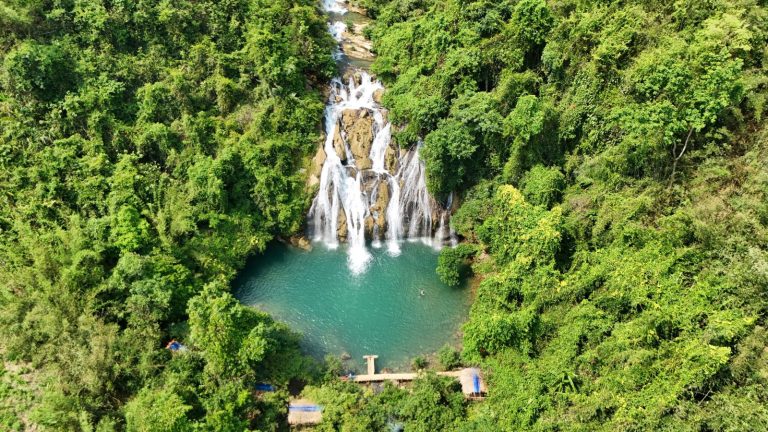
Above we have introduced Quang Tri tourist attractions for visitors to refer to. In addition, there are many other tourist attractions that visitors can refer to such as Ta Puong Waterfall, Sa Mu Pass, Chenh Venh village eco-tourism area… Visitors can refer to more through articles about Quang Tri tourism
Share this post: